 Diag Drive
P0300 Code: What a Random Misfire Means and What to Do About It
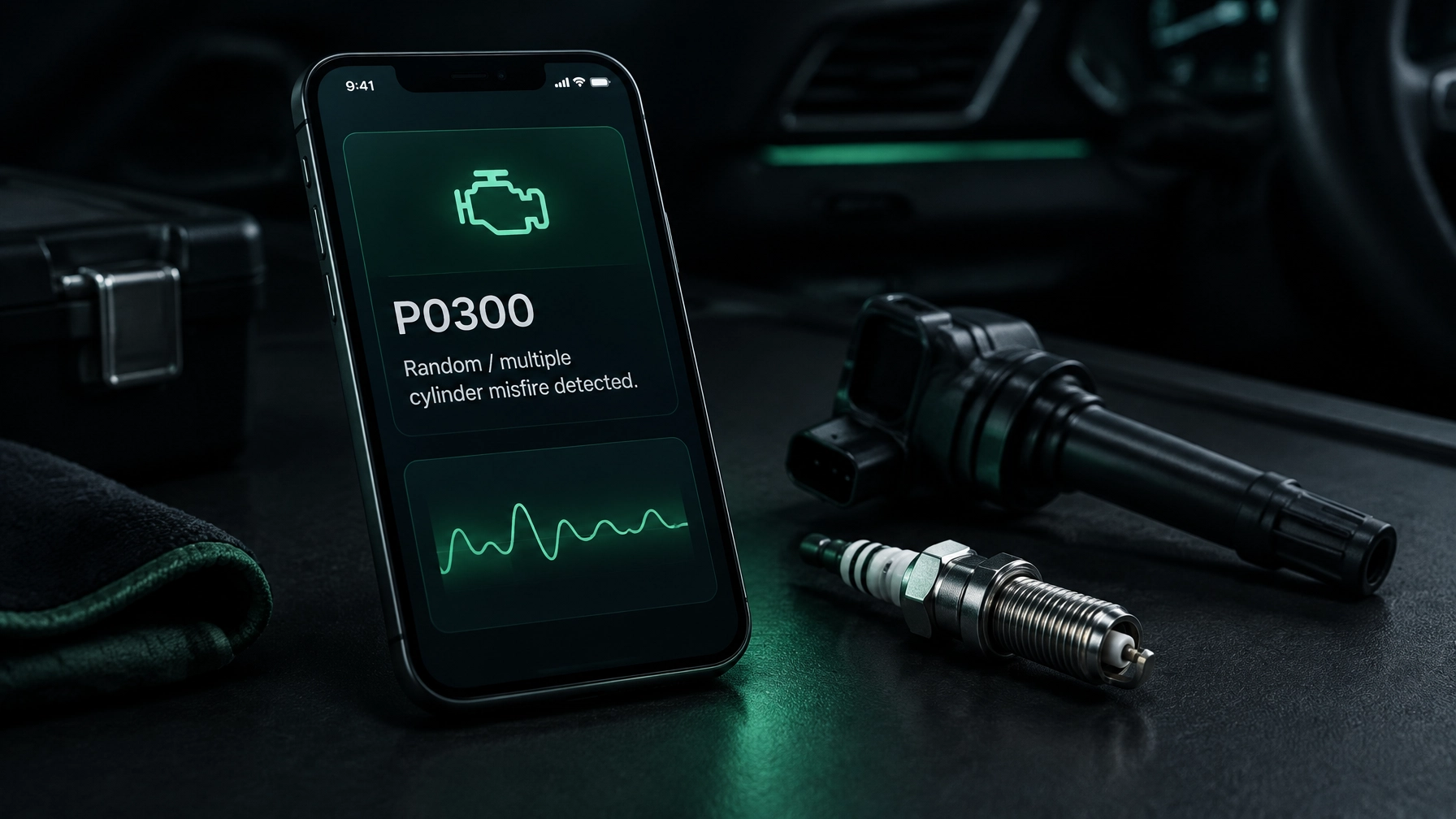
A P0300 code means your car has detected misfires in one or more cylinders, but it can’t pin the problem to just one cylinder. Worn spark plugs and failing ignition coils are common causes, though fuel, air or engine problems can also be responsible.
It’s worth finding the cause soon. A misfire can send unburnt fuel into the exhaust and overheat the catalytic converter. The part that helps reduce harmful emissions.
What does P0300 actually mean?
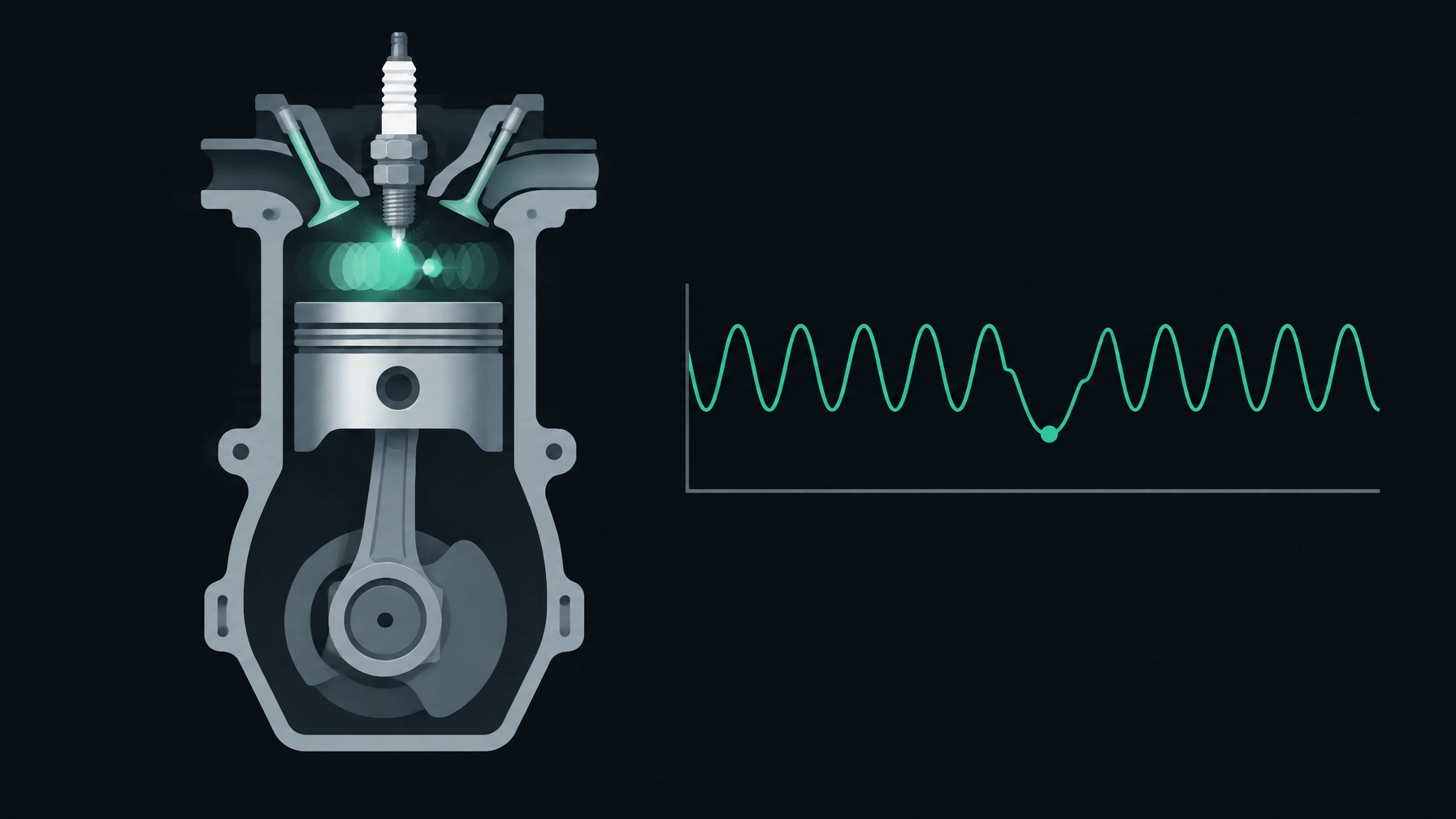
A misfire happens when one or more cylinders in the engine does not burn fuel properly. The engine computer, also called the ECU, detects a brief change in the crankshaft’s speed and records a fault code.
“Random” does not mean the problem has no cause. It means the ECU has detected misfires but hasn’t identified the same cylinder as the source each time. If it points to one cylinder, the code may be P0301, P0302 and so on, with the final digit identifying the cylinder.
You might notice an uneven idle, shaking, hesitation or a loss of power. Sometimes the first sign is the engine management light.
Is it safe to drive with P0300?
It depends on how the car is running and what the warning light is doing.
- Flashing engine light: Stop as soon as it is safe and switch off the engine if the light keeps flashing. A severe misfire can send unburnt fuel into the exhaust and overheat the catalytic converter. Arrange recovery or professional help rather than continuing your journey.
- Steady light and only a mild stutter: A short, careful trip to a safe place or garage may be reasonable. Avoid hard acceleration and get the fault checked promptly.
- Rough running, major loss of power or shaking: Don’t push on. Stop somewhere safe and arrange help.
A flashing check engine light is a warning to take seriously, not something to clear and ignore. For more on warning-light behaviour, see our guide to what an engine management light means and what to do.
Common causes of P0300
A fault code points towards a problem; it does not confirm which part needs replacing. Common causes include:
- Worn spark plugs. These are a very common cause of an engine misfire.
- Failing ignition coil packs. A coil supplies the spark that helps ignite the fuel-and-air mixture.
- A vacuum leak. Unwanted air entering the engine can upset how it runs.
- Dirty or faulty fuel injectors. Injectors deliver fuel to the engine cylinders.
- Low fuel pressure. The engine may not be getting fuel at the pressure it needs.
- Timing issues. The engine’s valves and ignition need to work in the right sequence.
- Low compression. On an older or worn engine, a cylinder may not build enough pressure to run properly.
How to diagnose P0300 at home
Work through the checks in order, and don’t replace parts based on the code alone.
- Read all the codes. Record every stored or pending code before clearing anything. A P0301–P0308 code alongside P0300 may point to a particular cylinder. P0171 can point towards a lean-running problem, while P0420 may indicate that the catalytic converter is not working as well as expected. A P0420 code can have several causes, so it does not prove the converter itself has failed; read our guide to what P0420 means and what to do.
- Check the freeze-frame data. This is a snapshot of engine conditions when the fault was recorded. It may include engine temperature and RPM (engine speed), which can help show when the misfire happened. Note any cylinder-specific codes separately.
- Look for simple visible issues. If you’re confident and can work safely, check that plug leads, where fitted, and electrical connectors are seated properly. Don’t touch hot or moving engine parts.
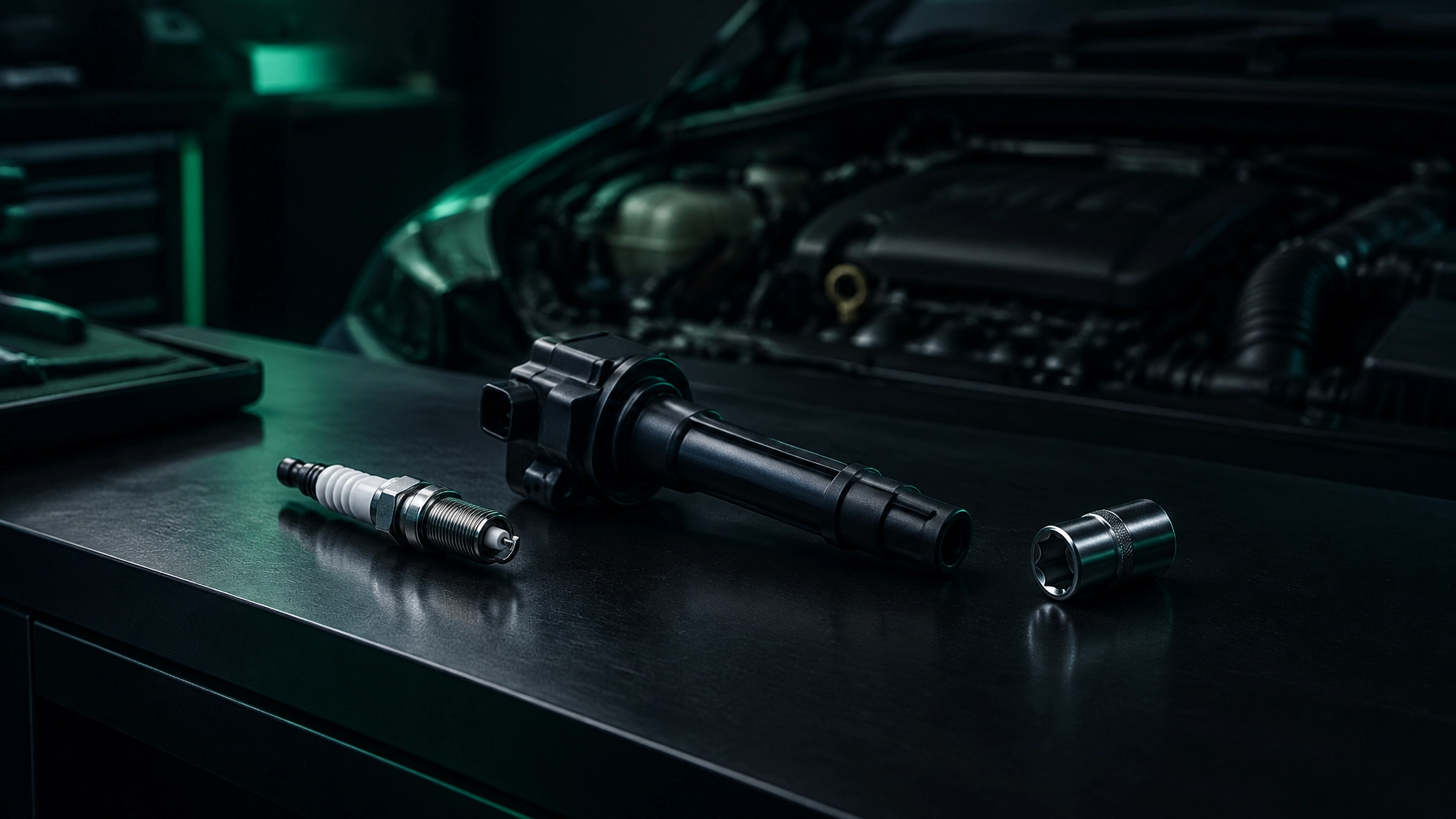
- Consider a coil swap test. A common DIY check is to move a suspected coil to another cylinder and see whether the misfire follows it. Only do this if you’re confident, and follow the vehicle’s service manual. If you’re unsure, leave it to a garage.
- Check live data if available. Live data means readings from the car while it is running. Some cars show misfire counters that help identify which cylinder is affected; not every car exposes them through a scanner.
- Get help interpreting the results. One code rarely tells the whole story. If you’re new to scanning, our guide explains how to read fault codes at home.
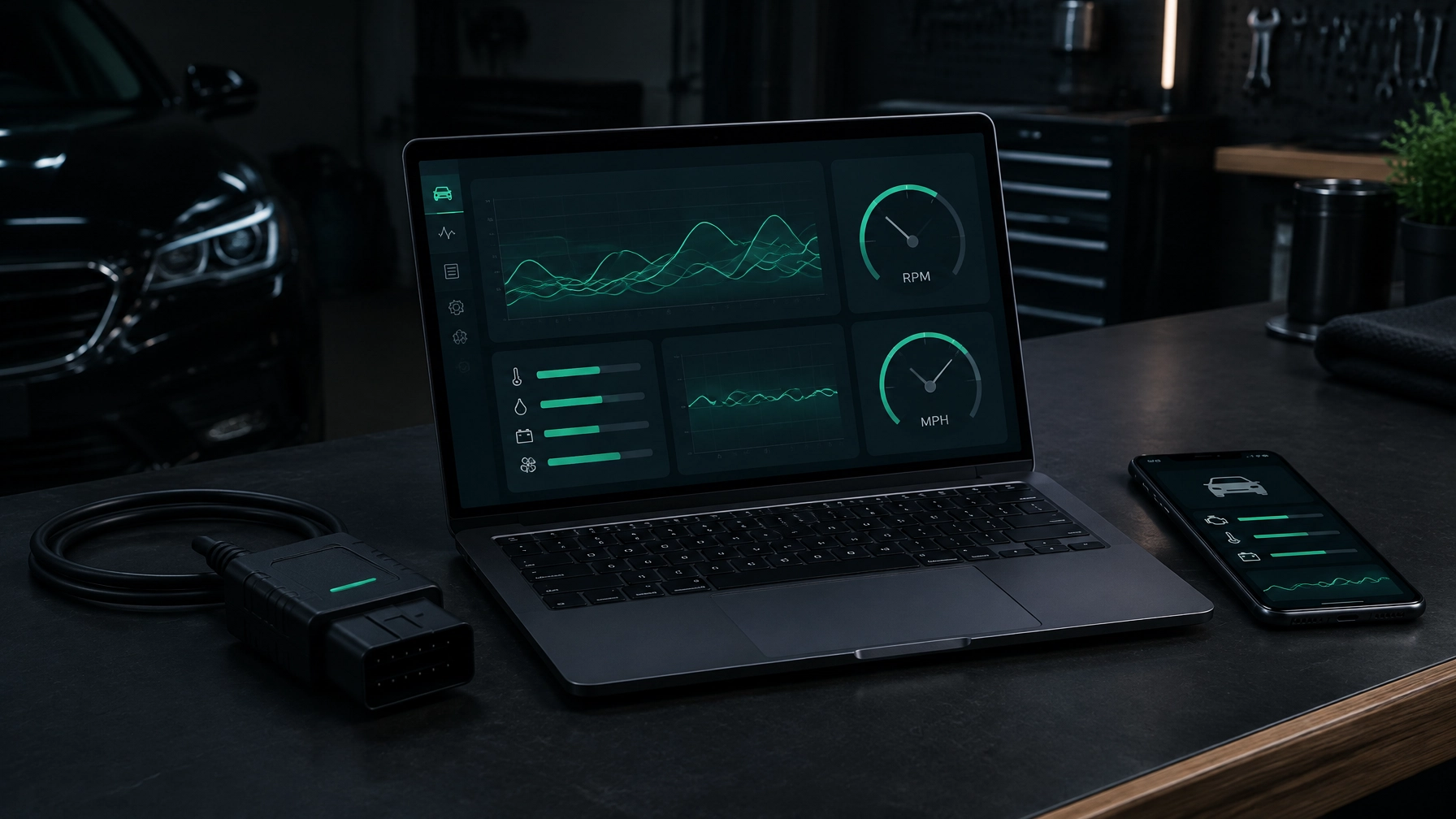
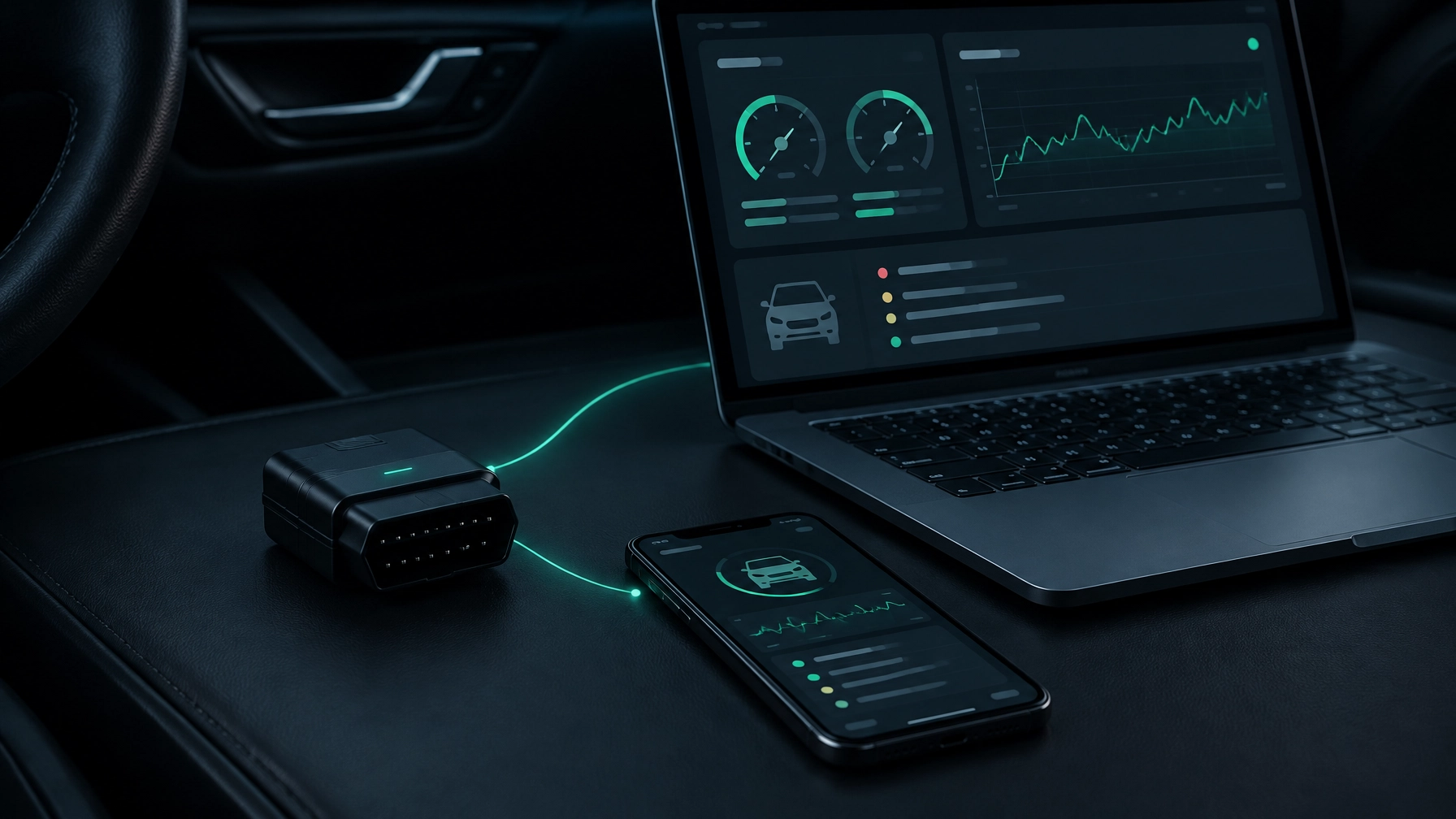
Diag Drive explains fault codes in plain English and can show live data and graphs. Its scanner works with Bluetooth or Wi-Fi ELM327 adapters on iPhone; Android also supports classic Bluetooth adapters. USB adapters do not work with phones, but the Mac and Windows desktop app supports USB, Bluetooth and Wi-Fi adapters. It works with petrol cars from 2001 and diesel cars from 2004. The AI mechanic can also help without an adapter: describe the symptom, add a photo or record the noise.
Try Diag Drive to read the codes and review what the car has reported. It includes 3 free diagnoses; DIY is £1.99/week and Pro is £4.99/week.
Fixes and what they cost
The right repair depends on the cause and the car. As rough UK guides, fitted spark plugs may cost £30–£150, and a fitted ignition coil may cost £80–£250. Prices vary with the vehicle, parts and labour.
Fixing a small ignition problem promptly can help avoid further damage. If a misfire is ignored, unburnt fuel can overheat the catalytic converter. Replacing one can cost £300–£900 or more, depending on the car and the part.
These are approximate ranges, not a quote. A garage should diagnose the cause before replacing parts, especially if several codes are present. Replacing the catalytic converter without fixing the misfire could leave the underlying problem in place.
Will P0300 fail an MoT?
A misfire can affect emissions, and a car running badly may fail its emissions test. An illuminated engine warning light can also be a reason for failure under the applicable MoT rules. The result depends on the car and what the test finds. Check the official MoT inspection manual for details.
Don’t clear the code just before an MoT and assume the problem is fixed. The underlying fault may still be there, and the car’s emissions checks may not yet be ready.
When to see a garage
Arrange professional diagnosis if the engine light is flashing, the car is losing power or running roughly, or the misfire continues after a basic check. A garage is also the right next step if you suspect low compression or a timing problem, as these need more involved testing.
If the car is shaking badly, overheating, making unusual mechanical noises or smells strongly of fuel, stop somewhere safe and seek help. A scan can narrow down the search, but it cannot confirm every mechanical fault or make the repair for you.
P0300 code FAQs
What does P0300 mean?
P0300 means the car has detected random or multiple-cylinder misfires. It identifies a misfire problem, not the failed part.
Can I drive with a P0300 code?
If the light is steady and the car has only a mild stutter, a short, careful trip to a safe place or garage may be reasonable. If the engine light is flashing, or the car is running badly or losing power, stop when safe and arrange help.
Why is my check engine light flashing?
A flashing engine light can indicate an active misfire. Unburnt fuel may overheat and damage the catalytic converter, so stop as soon as it’s safe and avoid continuing the journey.
How much does it cost to fix P0300?
It depends on the cause. As rough UK ranges, fitted spark plugs may cost £30–£150 and a coil £80–£250. If a neglected misfire damages the catalytic converter, replacement may cost £300–£900 or more.
Will P0300 clear itself?
The warning may go out if the fault is intermittent, but that doesn’t mean the cause has been repaired. Check and record all codes, and get a persistent or returning misfire investigated.
What to do next
Save all the codes and symptoms before clearing anything. If the engine light is flashing or the car is running badly, stop safely and arrange help. Otherwise, use the codes to guide sensible checks and book a garage if the cause isn’t clear.