 Diag Drive
Engine Management Light On? What It Means and What to Do

An engine management light on usually means the car’s engine computer has spotted a problem, but it doesn’t tell you which part has failed. If the light is steady and the car feels normal, you can usually drive carefully to a safe place or garage. If it’s flashing, or the car is running badly, stop somewhere safe and get help.
What the engine management light actually means
Your car’s engine control unit (ECU) monitors the engine and emissions systems. When a reading falls outside the expected range, it can switch on the engine management light (EML) and store a fault code.
There are hundreds of possible causes, from a loose fuel cap to a misfire. So the light is a warning to investigate, not a diagnosis, and not proof that one particular part needs replacing.
Amber vs flashing: what should you do?
| Warning | What it may mean | What to do |
|---|---|---|
| Steady amber | A fault has been detected. If the car runs normally, it may not need to stop immediately. | Drive gently, avoid hard acceleration and arrange a diagnostic check promptly. If you notice loss of power, rough running, smoke or unusual smells, stop safely. |
| Flashing amber | Often an active misfire, which can damage the catalytic converter. | Ease off, pull over at the first safe opportunity and switch off if it keeps flashing. Arrange assistance rather than carrying on with your journey. |
If the light comes on while you’re on a motorway, don’t stop in a live lane. Follow National Highways’ dashboard warning advice and reach a safe place, such as a service area or suitable exit.
MoT reminder: On most modern cars covered by the test rules, an EML that’s lit to indicate a fault is a Major defect and means an MoT failure. The inspection applies to vehicles from specified first-use dates, so check the official MoT inspection manual for your vehicle. Emissions faults can also cause a failure even if the lamp is off.
10 common causes of an engine management light
A fault code helps narrow down the search, but it doesn’t always identify a failed part. These are some common possibilities:
- Loose fuel cap or EVAP leak: On a petrol car, a cap that isn’t sealing properly or a leak in the fuel-vapour system can trigger a warning.
- Oxygen (lambda) sensor: A faulty reading can affect how the engine adjusts the fuel-and-air mixture.
- Mass airflow sensor: If the MAF sensor misreads how much air is entering the engine, fuelling can be affected.
- Spark plugs or coil packs: A fault can cause a misfire, often felt as shaking, hesitation or uneven running.
- Catalytic converter: P0420 is the code your car stores when the catalytic converter isn’t cleaning the exhaust as well as it should. The code is a clue to investigate, not proof the converter itself must be replaced.
- EGR valve or DPF on a diesel: A sticking exhaust-gas recirculation valve or a diesel particulate filter problem can bring on the light.
- Vacuum or boost leak: An air leak or turbo boost problem can leave the engine short of the air it expects; P0299 is one possible underboost code.
- Coolant temperature sensor: An incorrect temperature reading can affect engine management and fuelling.
- Wiring or connector fault: A damaged wire or loose connection can interrupt a sensor signal and produce a fault code.
- Low fuel or weak battery: Very low fuel or low voltage can sometimes contribute to misleading readings or stored faults, so check the basics before assuming a major repair.
How to find out what’s actually wrong
You can read the car’s codes at home with an OBD-II adapter and a compatible app. Here’s the basic process:
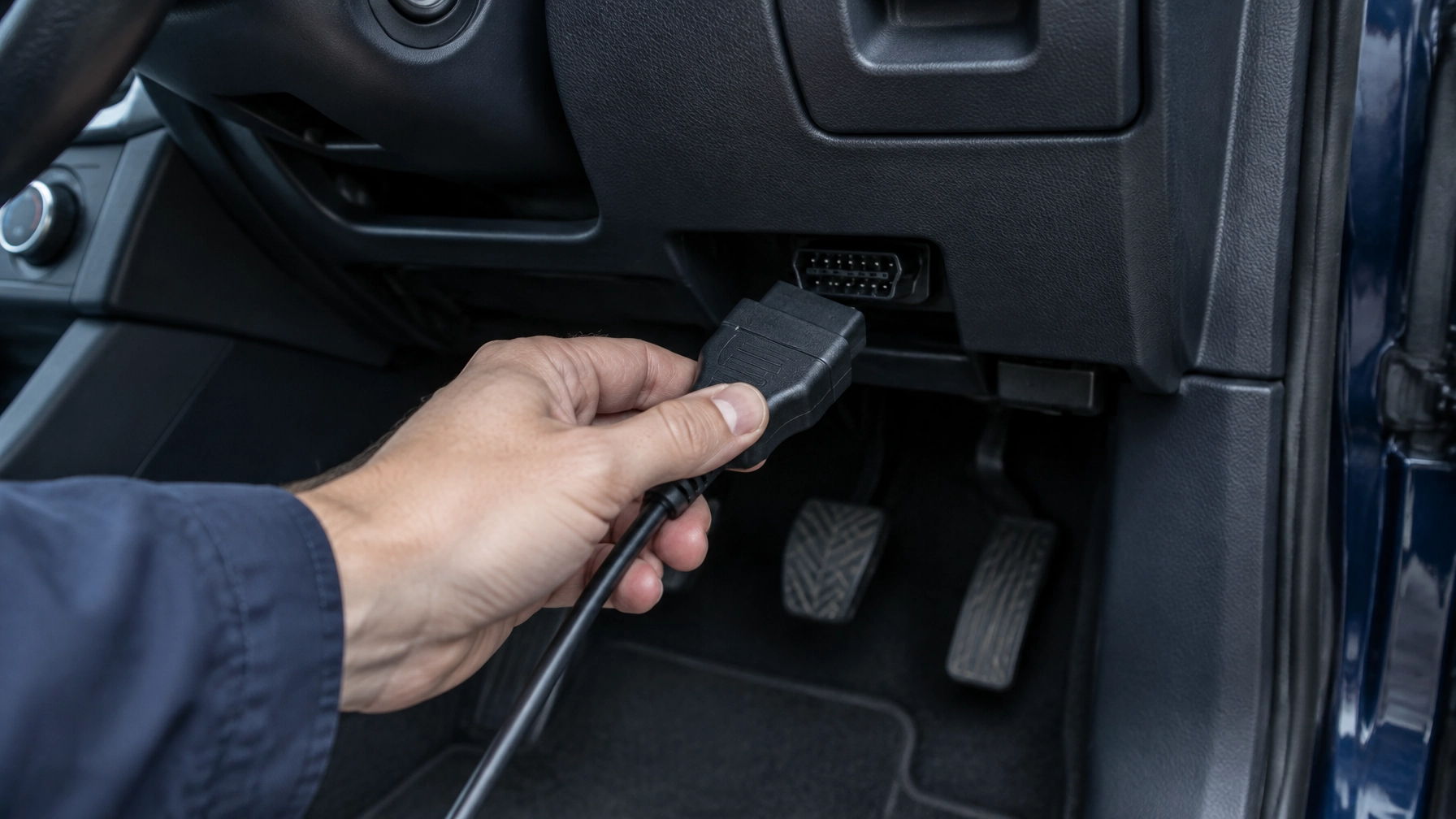
- Find the OBD-II port. It’s usually under the dashboard on the driver’s side, within about 60 cm of the steering wheel. Most UK petrol cars first used from 2001 and diesels from 2004 have an OBD-II connection, though the information available can vary by vehicle.
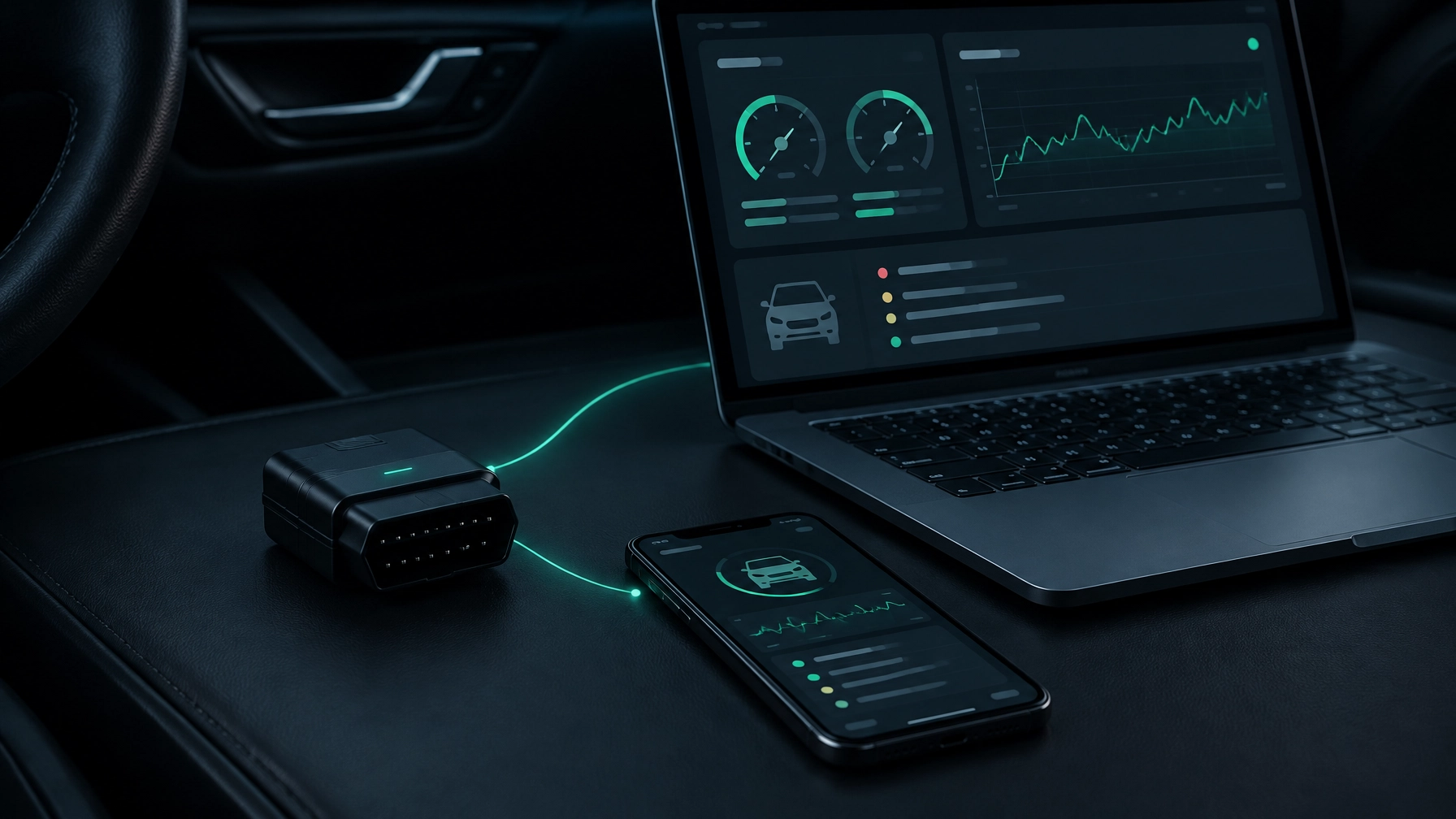
- Plug in an ELM327 or OBDLink adapter. Make sure it’s compatible and seated properly.
- Connect over Bluetooth or Wi-Fi, depending on your adapter.
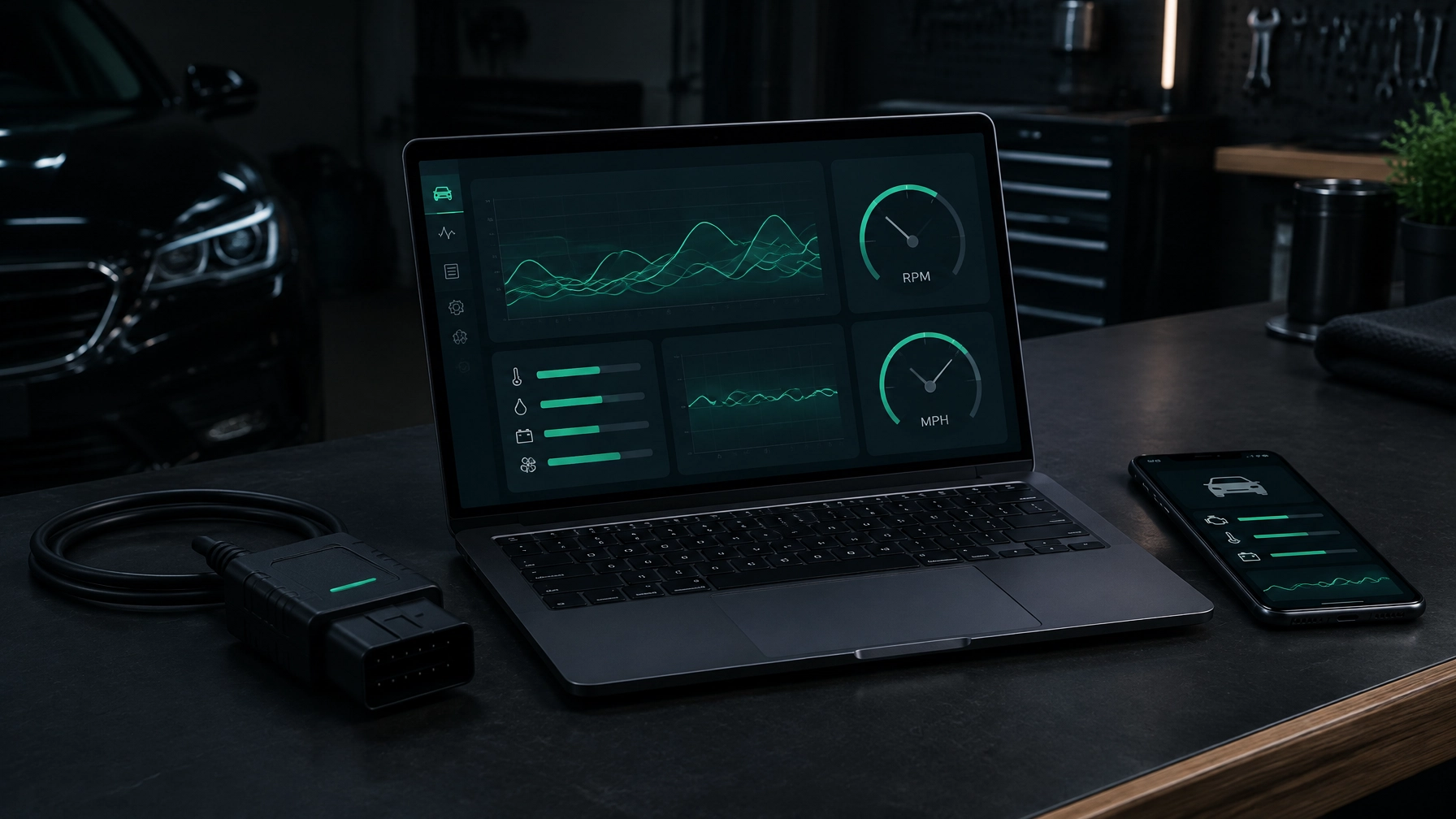
- Open Diag Drive. Diag Drive runs on iPhone, Android, Mac and Windows, and works with supported petrol cars from 2001 and diesel cars from 2004. On your phone it pairs with Bluetooth or Wi-Fi ELM327 adapters; the Mac and Windows desktop app also works with USB adapters, handy if you already own a USB OBD cable.
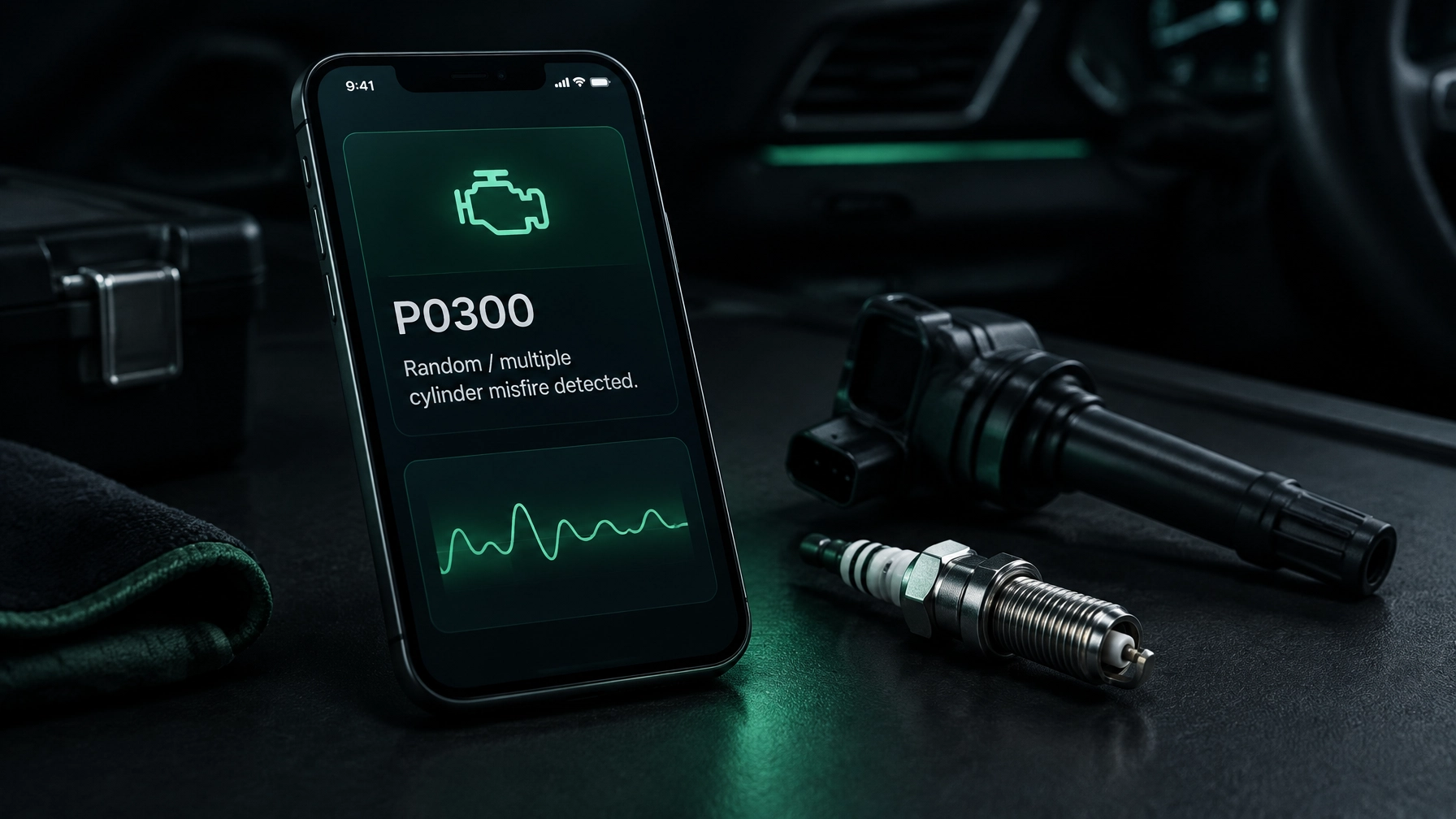
- Read the stored codes and freeze-frame data. Freeze-frame data records conditions such as engine speed and temperature when the fault was detected. If you’re new to fault codes, our guide on how to read fault codes on any car walks through the whole process.
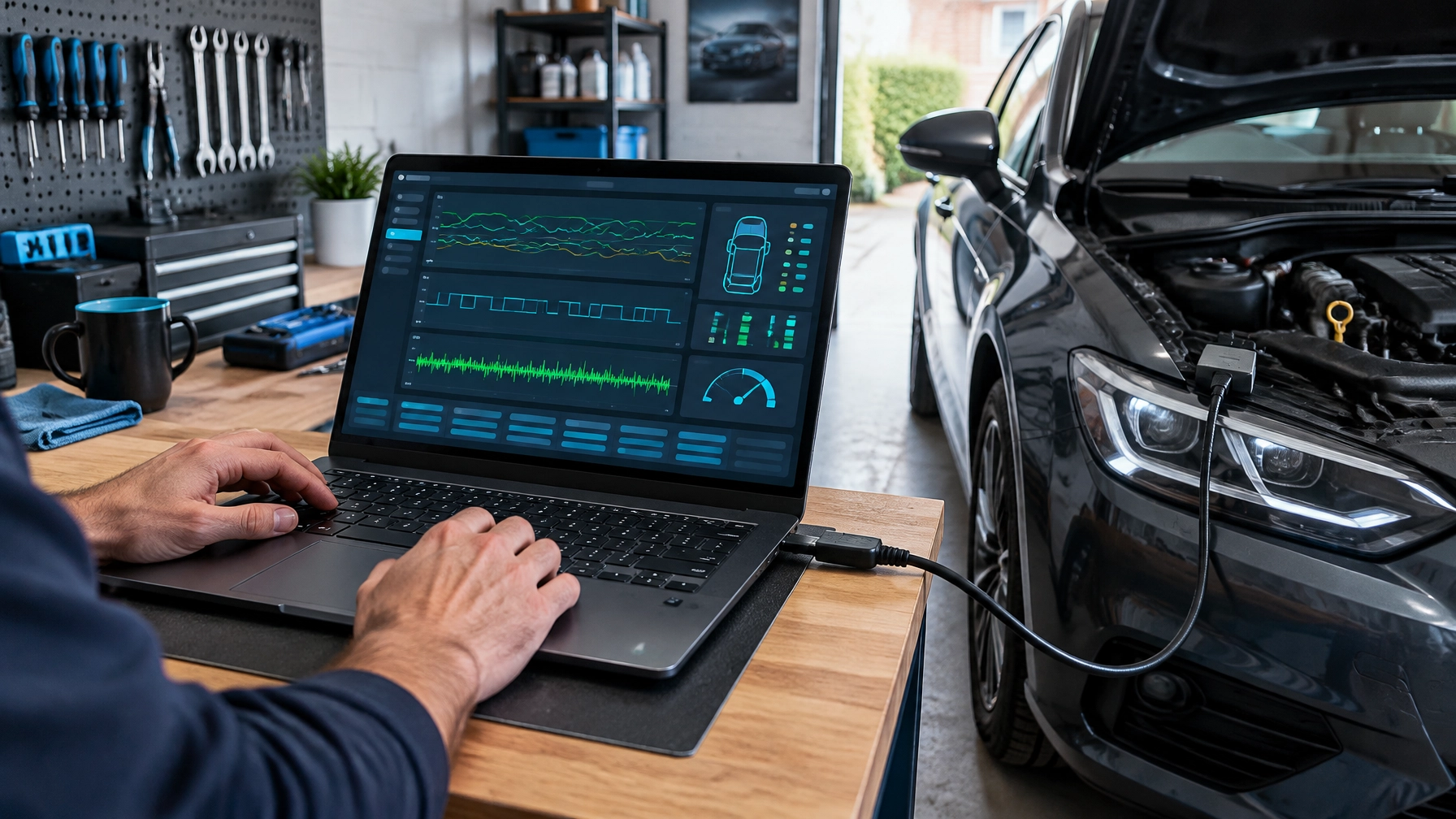
- Check the explanation and live data. Diag Drive explains codes in plain English, with common causes and fixes. Its live data and graphs let you inspect readings such as fuel trims, lambda, airflow and coolant temperature. Values need to be interpreted in the context of your car and the fault.
- Ask the AI mechanic. Describe what the car is doing, add a photo or record the noise it’s making, and get guidance tuned to your vehicle. You don’t need an adapter for this part — describing the symptom, or sending a photo or a recording of the noise, is enough to get started.
- After the repair, clear the code and complete the readiness checks. Follow your vehicle’s normal driving conditions so the relevant monitors can run. A garage may still be needed to test a suspected component or carry out a repair.
Read the code properly, don’t just clear the light
A stored code means the ECU recorded a fault. A pending code can mean it has noticed a problem that hasn’t yet met the conditions to become confirmed. A permanent code is retained until the car’s system verifies that the fault has been fixed; clearing codes with a tool won’t necessarily remove it.
Treat a code as a starting point, not a shopping list of parts. For example, a sensor-related code may be caused by wiring, an air leak or another problem affecting the reading. Check the freeze-frame information and, where appropriate, live data before deciding what to replace.
Clearing the warning without fixing the cause often makes the light return. It can also reset emissions readiness monitors, so the car may not be ready for an MoT emissions test.
Timing matters before an MoT
Clearing codes resets your car’s emissions readiness monitors, and an MoT emissions check can be affected if those monitors aren’t ready. If the light is on ahead of the test, get the underlying fault seen to rather than clearing the code and hoping for the best.
What does an engine diagnostic cost?
As a rough UK guide, an independent garage’s basic code scan may cost around £25–£80, while a main-dealer diagnostic appointment may be around £90–£150. Prices vary, and advanced fault-finding can cost more. Ask whether the quoted fee covers only reading codes or includes time spent testing the cause.
If you’re still choosing hardware, our honest guide to the best OBD2 scanners in the UK compares the options. You can try Diag Drive with three free diagnoses. If you want ongoing use, DIY is £1.99 a week and Pro is £4.99 a week. It won’t replace specialist testing or repairs, but it helps you understand what the car has reported before you book anything.
Want to know what your light is trying to say? Download Diag Drive for iPhone, Android, Mac or Windows, plug in the adapter you already own, and read the codes before you book a garage.
When to stop and call a garage
Stop somewhere safe and arrange professional help if the engine light is flashing, the car loses power or enters limp mode, or you notice smoke, overheating or a strong fuel smell. If the brake or ABS warning light appears as well, don’t assume it’s an engine-only issue. When in doubt, consult your handbook or call for recovery.
Frequently asked questions
Is it safe to drive with the engine management light on?
A steady amber light may be safe for a short, careful journey if the car feels normal, but get it checked promptly. Stop safely if it flashes or the car runs badly.
Will the engine management light fail an MoT?
For most modern cars covered by the EML inspection, yes. A lamp indicating a fault is a Major defect, and emissions faults can also cause a failure. Check the GOV.UK inspection manual for your vehicle’s rules.
Can I clear the engine management light myself?
Yes, a compatible diagnostic tool can clear some codes, but clearing the light doesn’t fix the fault. It may return, and clearing codes can reset emissions readiness monitors.
Does the light always mean an expensive repair?
No. Some causes are simple, while others need parts or specialist diagnosis. Read the code first rather than guessing at a repair.
Why did the light come on, then go off?
Some faults happen intermittently, so the light may switch off when the reading returns to normal. A code may still be stored or pending, so it’s worth checking even if the lamp has gone out.
Reading the code turns the light from a worry into a plan. Find out what your car is saying first, then decide whether it’s a five-minute fix or a job for the garage.